

The winter season is a great time to explore the outdoors with your dog, but as temperatures fall and snow begins to fly, there are some essential things you need to know about keeping your dog safe and healthy in cold weather. Even if your dog has a thick coat and seems excited by the prospect of going outside in the winter, take precautions. As winter hits and temperatures drop, a few questions come to mind: How cold is too cold for dogs to go outside? Can dogs walk on ice? How many dogs walk a day? Etc.
Here are some things to consider before heading out in the snow with your pooch.
How Cold Is Too Cold For Dogs To Go Outside?
You may be wondering, is it ever too cold for your dog to go outside? The answer is yes. Sometimes it will be too cold for your dog to go outside. Never leave a dog in an outdoor kennel during the winter months. In most places, the average temperature ranges from 30 degrees F (0 C) to 50 F (-10 C). While that might seem like a comfortable temperature range for humans, it can cause damage and even death for our canine companions if exposed for long periods.
Dogs with short hair have less protection from the cold than dogs with long hair, and their skin is thinner. To prevent frostbite and other health issues, keep them indoors when it gets really cold.
Long-haired dogs can also suffer if exposed to temperatures below 32 degrees Fahrenheit (zero degrees Celsius) for extended periods. The best way to prevent this is by keeping your dog inside during these times.
Quick Answer: How Cold Is Too Cold for Dogs?
There is no single outdoor temperature that is safe for every dog. Some dogs may experience discomfort below 45°F (7.2°C), while vulnerable dogs may face increased risks below 32°F (0°C). Temperatures below 20°F (-6.7°C) warrant particular caution for all dogs because prolonged exposure can increase the risk of hypothermia and frostbite.
Your dog’s breed, size, age, coat thickness, health, activity level, wind exposure, and environmental conditions should all influence how long they spend outside.
Source: How Cold Is Too Cold for Your Dog?
Dog Cold Weather Safety Temperature Guide
The following table provides a general screening guide for pet owners. These temperature ranges are not guaranteed safety limits or substitutes for individualized veterinary advice.
| Temperature (°F) | Temperature (°C) | General Risk | Recommended Action |
|---|---|---|---|
| Above 45°F | Above 7.2°C | Generally lower risk | Monitor your dog’s comfort during normal outdoor activities. |
| 32°F to 45°F | 0°C to 7.2°C | Increased caution | Monitor small, short-haired, elderly, and cold-sensitive dogs closely. |
| 20°F to below 32°F | -6.7°C to below 0°C | Elevated risk | Limit exposure, particularly for vulnerable dogs. Consider protective clothing. |
| Below 20°F | Below -6.7°C | High risk with prolonged exposure | Prioritize brief, supervised bathroom breaks and indoor exercise. |
Important: Strong winds, freezing rain, wet fur, and icy surfaces can make outdoor conditions more dangerous even when the air temperature appears acceptable. Always monitor your dog’s behavior rather than relying exclusively on a thermometer.
What Factors Affect a Dog’s Cold Weather Tolerance?
Dogs respond differently to winter temperatures. The following factors can influence their ability to remain comfortable outdoors.
1. Breed and Coat Thickness
Dogs with dense, insulating coats, such as Siberian Huskies and Alaskan Malamutes, are generally better adapted to cold environments than short-haired breeds such as Chihuahuas and Greyhounds.
However, even cold-adapted breeds can experience cold-related injuries under severe or prolonged exposure.
2. Body Size and Weight
Smaller dogs generally lose body heat more quickly than larger dogs because of their higher surface-area-to-body-mass ratio. Underweight dogs may also have less insulation against the cold.
3. Age and Health Conditions
Puppies, senior dogs, and dogs with underlying medical conditions may have greater difficulty maintaining their body temperature. Dogs with arthritis may also experience mobility challenges when walking on slippery winter surfaces.
Consult your veterinarian about appropriate outdoor activities if your dog has an existing medical condition.
4. Wind, Moisture, and Weather Conditions
Cold winds, wet snow, freezing rain, and damp fur can accelerate heat loss. A dry, calm winter day may be more manageable than a windy or wet day at the same temperature.
5. Activity Level and Cold Acclimation
A dog’s physical activity and familiarity with cold weather can influence its comfort outdoors. Dogs accustomed to warm indoor environments may require additional precautions when temperatures suddenly drop.
Can Dogs Walk on Ice and Snow?
Dogs can walk on ice and snow, but slippery surfaces can lead to falls, muscle strains, paw injuries, and other mobility problems.
Extra caution is necessary for senior dogs, puppies, and dogs with joint or mobility conditions.
To reduce winter walking hazards:
- Choose cleared sidewalks and walking paths whenever possible.
- Avoid visibly icy surfaces, steep slopes, and areas of black ice.
- Keep your dog on a leash to maintain better control.
- Consider properly fitted dog boots with textured soles.
- Avoid walking on frozen ponds, lakes, rivers, and other bodies of water.
- Clear snow and ice from frequently used pet routes around your home.
Traction products may provide additional surface grip when applied according to the manufacturer’s instructions. However, no traction product can eliminate every slipping hazard.
How Long Can Dogs Stay Outside in Freezing Temperatures?
There is no universally safe outdoor time limit for dogs in freezing weather. The appropriate duration depends on the dog’s individual characteristics, environmental conditions, and signs of discomfort.
During freezing temperatures, consider shorter, supervised walks instead of prolonged outdoor activities. In severe cold, prioritize essential bathroom breaks and provide exercise indoors.
Do not wait until your dog shows severe symptoms before returning indoors. If your dog appears uncomfortable, end the walk immediately.
Signs That Your Dog Is Too Cold
Recognizing early warning signs can help prevent more serious cold-related health problems.
- Persistent shivering or trembling.
- Repeatedly lifting paws off the ground.
- Whining or unusual vocalization.
- Reluctance to walk or move.
- Seeking shelter or attempting to return indoors.
- Unusual tiredness, weakness, or reduced responsiveness.
- Difficulty walking or loss of coordination.
If your dog shows these signs, move them to a warm, dry environment and assess their condition.
Seek immediate veterinary care if your dog experiences severe weakness, collapse, abnormal breathing, confusion, or suspected hypothermia or frostbite.
Understanding Hypothermia and Frostbite in Dogs
What Is Hypothermia?
Hypothermia occurs when a dog’s body temperature falls below its normal range. Prolonged cold exposure can interfere with normal body functions and may become life-threatening.
If hypothermia is suspected, move your dog indoors, gently dry wet fur, wrap them in warm blankets, and contact a veterinarian or emergency veterinary hospital immediately.
Avoid applying heating pads, very hot water, or direct high heat to your dog’s body.
What Is Frostbite?
Frostbite is a cold-related tissue injury that can affect exposed areas such as the paws, ears, and tail.
Possible warning signs include:
- Pale, gray, or bluish skin.
- Swelling or discomfort.
- Unusually cold or firm skin.
- Blistering or darkened tissue.
Frostbite symptoms may not become immediately visible. Do not rub affected areas or attempt aggressive warming. Seek veterinary attention if you suspect a cold-related tissue injury.
How to Protect Your Dog’s Paws During Winter
Winter surfaces can expose dog paws to ice, packed snow, rough pavement, road salt, and chemical deicing products. Following a simple paw-care routine can help reduce irritation and injury.
1. Use Properly Fitted Dog Boots
Dog boots can provide a physical barrier between paw pads and cold surfaces, snow, and deicing chemicals. Choose boots that fit comfortably and provide adequate grip.
Introduce boots gradually indoors so your dog can become accustomed to wearing them before going outside.
2. Consider a Dog-Specific Paw Balm
A paw balm formulated specifically for dogs may help protect paw pads from dryness and environmental exposure.
Ask your veterinarian before using petroleum jelly or other household products on your dog’s paws, particularly if your dog frequently licks its feet.
Paw balms do not provide complete insulation from extreme cold or guarantee protection against ice-related injuries.
3. Clean and Dry Paws After Every Walk
After returning indoors, gently rinse or wipe your dog’s paws with lukewarm water to remove snow, road salt, and deicing residues.
Dry the paws thoroughly, including the areas between the toes, and check for cracks, redness, swelling, or trapped debris.
4. Limit Exposure to Deicing Chemicals
Some deicing chemicals can irritate paw pads or cause digestive problems if swallowed. Avoid heavily treated areas where practical and prevent your dog from licking chemical residues from its paws.
Even products marketed for use around pets should be applied according to label directions and kept out of reach of animals.
Reference: How to Protect Your Dog’s Paws in Winter.

Reducing Slipping Hazards Around Your Home in Winter
Maintaining frequently used outdoor areas is an important part of winter safety for both people and pets.
Pay particular attention to:
- Residential driveways.
- Sidewalks and garden paths.
- Front entrances and outdoor steps.
- Patios and outdoor pet areas.
- Frequently used bathroom routes.
Remove accumulated snow, address icy patches, and use suitable surface treatments where necessary. Remember that ice-melting products and traction agents serve different purposes.
Ice melt helps break down ice, while traction agents are intended to improve grip on slippery surfaces. Neither replaces routine winter maintenance and careful supervision.
Walk On Ice is a mineral-based traction product designed to improve surface grip on icy and snow-covered areas.
According to the manufacturer, the product contains naturally occurring minerals and is intended for use on slippery walkways and other suitable surfaces.
Walk On Ice is a traction agent, not an ice-melting product. It does not prevent hypothermia, frostbite, or all slipping injuries.
Safe Paw – Salt-Free and Chloride-Free Ice Melt
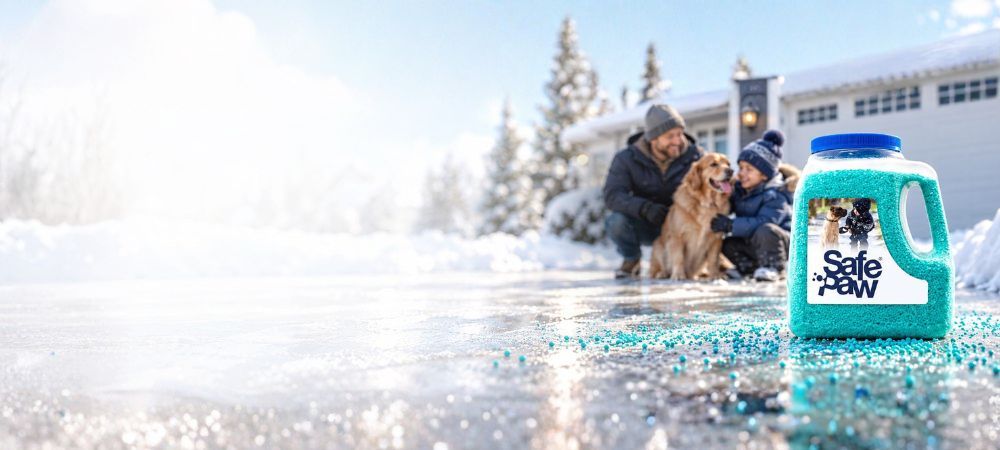
Safe Paw is marketed as a salt-free and chloride-free ice melt designed for winter maintenance in areas used by people and pets.
Always follow the manufacturer’s application instructions, check surface compatibility, and prevent pets from ingesting ice-melting products.
Safe Thaw – Commercial Winter Maintenance
Safe Thaw is marketed as a salt-free and chloride-free ice melt for commercial and larger-scale winter maintenance applications.
Product selection should consider the intended application, surface conditions, manufacturer instructions, and potential exposure to people and animals.
Winter Safety Checklist for Dog Owners
Before heading outdoors with your dog during winter, review the following checklist:
- Check the temperature, wind conditions, and weather forecast.
- Consider your dog’s breed, age, size, coat, and health.
- Choose shorter walks during severe weather.
- Use appropriate winter clothing for cold-sensitive dogs.
- Consider dog boots or a veterinarian-recommended paw balm.
- Select cleared routes and avoid slippery surfaces.
- Watch for shivering, paw lifting, and reluctance to walk.
- Clean and dry your dog’s paws after returning indoors.
- Provide a warm, dry indoor resting area.
- Keep emergency veterinary contact information accessible.
Frequently Asked Questions
1. Is 32°F (0°C) too cold for dogs to go outside?
Not necessarily for every dog. However, freezing temperatures require additional caution, particularly for puppies, senior dogs, small breeds, short-haired dogs, and dogs with medical conditions. Keep outdoor exposure appropriate to your dog’s individual tolerance.
2. Is 20°F (-6.7°C) too cold to walk a dog?
Temperatures around or below 20°F warrant considerable caution. Avoid prolonged walks, prioritize brief supervised bathroom breaks, and monitor your dog closely for discomfort.
3. Can dogs get frostbite on their paws?
Yes. Prolonged exposure to freezing temperatures can cause frostbite, including injuries to paws, ears, and tails. Protective boots and limited exposure may help reduce the risk.
4. Do dogs need boots in winter?
Not every dog requires winter boots. However, properly fitted boots can be beneficial when walking on snow, ice, chemically treated sidewalks, or rough winter surfaces.
5. Can dogs walk barefoot in the snow?
Some dogs tolerate brief walks in snow without boots. Their comfort depends on temperature, snow conditions, paw health, and individual cold tolerance. Return indoors if your dog repeatedly lifts its paws or shows discomfort.
6. Can dogs sleep outside in freezing weather?
Indoor shelter is the safer choice for most companion dogs during freezing or severe winter weather. Outdoor housing requires appropriate weather protection and individualized assessment of the dog’s health and cold tolerance.
7. How can I tell if my dog is too cold during a walk?
Watch for shivering, paw lifting, whining, reluctance to continue walking, weakness, and unusual behavior. End the walk and return to a warm environment when your dog shows signs of discomfort.
8. How can I protect my dog’s paws from road salt?
Avoid heavily treated surfaces, consider protective dog boots, and rinse or wipe paws after each walk. Prevent your dog from licking deicing residues.
9. Is a traction agent the same as an ice melt?
No. A traction agent helps improve grip on slippery surfaces, while an ice melt is designed to help melt ice. Both should be used according to their intended purpose and manufacturer instructions.
Conclusion
Keeping your dog comfortable during winter requires more than checking the outdoor temperature. Breed, age, health, coat thickness, wind, moisture, and surface conditions all influence cold-weather tolerance.
Limit exposure during extreme weather, protect your dog’s paws, maintain outdoor walking areas, and recognize the early signs of cold-related discomfort.
By combining appropriate winter precautions with regular supervision, pet owners can help reduce unnecessary risks and make outdoor winter activities more manageable for their dogs.
References and Additional Resources
- How Cold Is Too Cold for Your Dog?
General cold tolerance, temperature considerations, and individual risk factors. - 5 Tips for Walking Your Dog in the Winter
Winter walking precautions and cold-related safety considerations. - How to Protect Your Dog’s Paws in the Winter
Paw protection, deicing chemical exposure, and winter paw care.
Safe Paw
The Original and #1 Selling Pet and Child Safe Ice Melt for over 20 years. Guaranteed environmentally safe – will not harm waterways and sensitive wetlands. All products are made in the USA.

Safe Thaw
Imagine an ice melt you can put down and never worry about. It won’t harm pets, kids, and your property. That’s Safe Thaw. Unlike anything else on the market, Safe Thaw can change how winter affects our planet.