100% People, Pet & Plant Safe · Ships across the USA
Menu

Menu
How Does Walk On Ice Traction Agent Create Instant Grip on Ice?
Sprinkle it over an icy or snowy surface and its mineral blend helps create a more textured contact layer for shoes, paws and tires. It is designed to provide traction immediately, without waiting for a melting process.

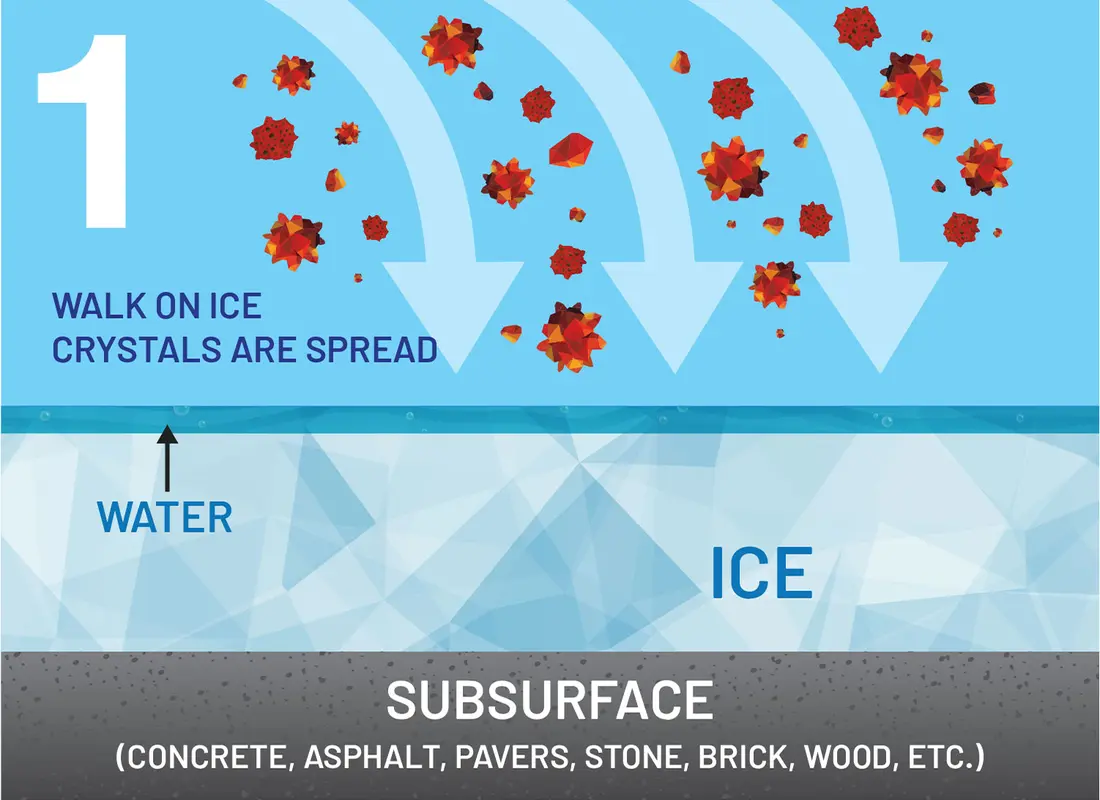
Spread the walk on ice granules
Apply granules to the specific icy or snowy contact area where traction is needed.
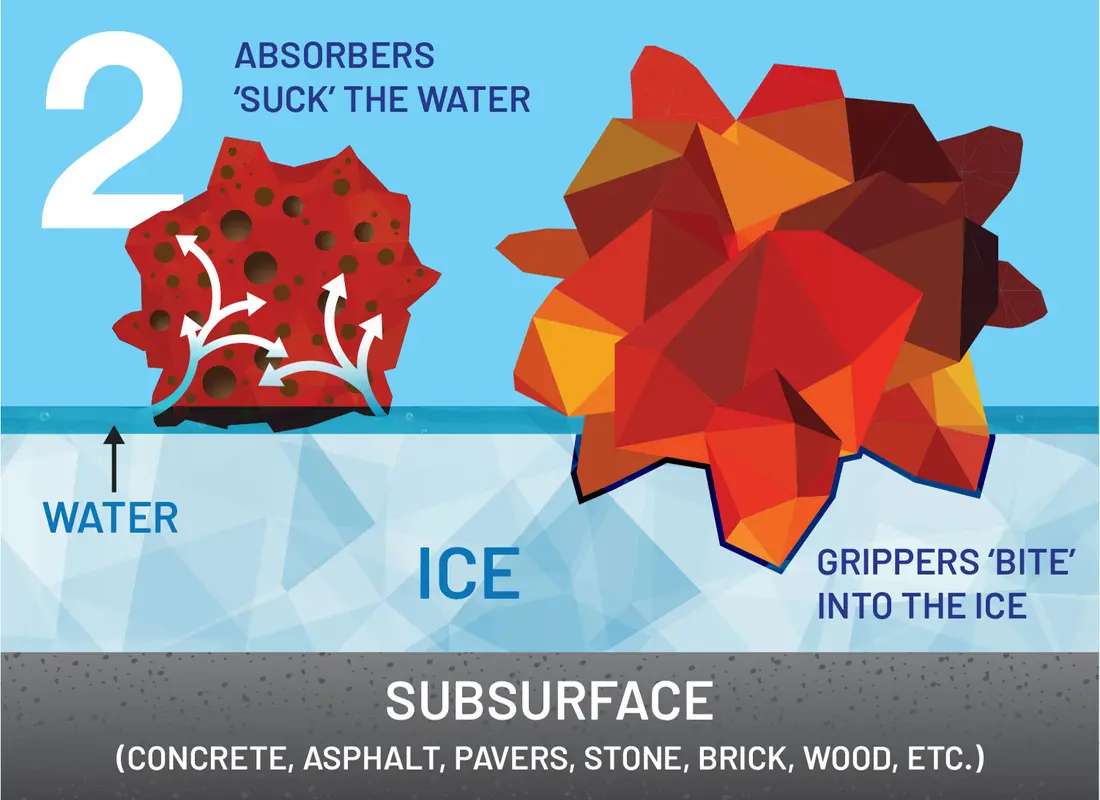
Grippers bite into the surface
Hard mineral edges lock against the ice to create a rough, high-traction footing underfoot and under tires.

Create a textured contact layer
The granules create a more textured layer for shoes, paws and tires.
Clear comparison
Traction Agent Versus Ice Melts
What Is the Difference?
A traction agent adds physical texture and friction to an icy surface. An ice melter uses a chemical process to lower the freezing point of water, loosen bonded ice or begin melting it.
A traction agent is generally more appropriate when additional grip is needed immediately. An ice melter is more appropriate when the goal is to break down or remove accumulated ice over time. In some situations, physical snow removal, deicing and targeted traction can be used together.
| Comparison | Traction Agent | Ice Melter |
|---|---|---|
| Primary purpose | Helps increase friction and surface grip. | Helps melt ice or weaken the bond between ice and the underlying surface. |
| How it works | Adds granular texture between the frozen surface and shoes, paws or tires. | Uses a chemical freezing-point depressant to form brine and begin loosening or melting ice. |
| Effect on the ice | The ice generally remains in place beneath the traction material. | The ice begins to melt, loosen or separate from the pavement. |
| Speed of useful action | Can provide additional grip immediately after application. | Requires time, moisture and suitable temperature conditions for the melting process. |
| Temperature dependence | Does not depend on a chemical melting reaction, although snow, freezing rain and traffic can affect performance. | Performance depends heavily on the deicer chemistry, pavement temperature, application rate and moisture conditions. |
| Best timing | Useful after slippery conditions have formed and someone needs to cross or use a specific area. | Can be applied before a storm as an anti-icing treatment or after ice forms as a deicing treatment, depending on the product. |
| Surface condition afterward | Leaves a textured granular layer over the frozen surface. | May produce water, slush or loosened ice that can require clearing. |
| Best application areas | Targeted areas such as steps, entrances, short walkways, slippery patches and around vehicle tires. | Larger areas where reducing or removing bonded ice is the objective. |
| Use during extreme cold | Can add friction when chemical melting action is slow, but the material may still be covered or displaced. | Some deicers become slower or substantially less effective as pavement temperatures fall. Effective temperature ranges differ by formulation. |
| Reapplication | May need to be reapplied after traffic, wind, snowfall, freezing rain or surface movement displaces or covers the material. | May need to be reapplied if it becomes diluted, is removed with snow or if ice reforms. |
| Snow and ice removal | Does not replace shovelling, ploughing or mechanical ice removal. | Can make bonded ice easier to remove, but it does not replace timely snow clearing. |
| Tracking and cleanup | Loose particles may be tracked indoors or collect near drains. Excess material may need to be swept up. | Residue, brine and slush may be tracked indoors or enter surrounding soil and drainage systems. |
| Surface considerations | Effects depend on particle hardness, size and the surface being treated. Some abrasive materials can scratch sensitive indoor flooring if tracked inside. | Effects depend on the chemical formulation, application rate, concrete condition, metal exposure and frequency of use. |
| Pet considerations | Cannot be judged from the words “traction agent” alone. Review the product label, composition and Safety Data Sheet. | Cannot be judged from the words “ice melter” alone. Ingredients, concentration, exposure and label directions matter. |
| Environmental considerations | Not automatically impact-free. Sand, grit and minerals can contribute to sediment, dust or blocked drainage when overapplied. | Chloride-based runoff can affect freshwater, soil and vegetation. Other deicer chemistries have their own environmental tradeoffs. |
| Main limitation | Improves grip but does not remove the underlying winter hazard. | Helps manage ice but may not provide immediate grip while the melting process is taking place. |
| Most appropriate when | You need targeted, immediate surface traction. | You need to loosen, reduce or remove accumulated ice. |
Which One Should You Use?
Choose according to the immediate condition and the result you need.

Need Immediate Traction?
Walk On Ice portable mineral traction agent canister. Use on icy steps, walkways, entrances, driveways, sidewalks and around vehicle tires.

Need to Melt Ice?
Safe Paw 100% chloride-free, salt-free, pet-safe ice melt jug. Use it to help melt and loosen accumulated ice on steps, walkways and driveways.
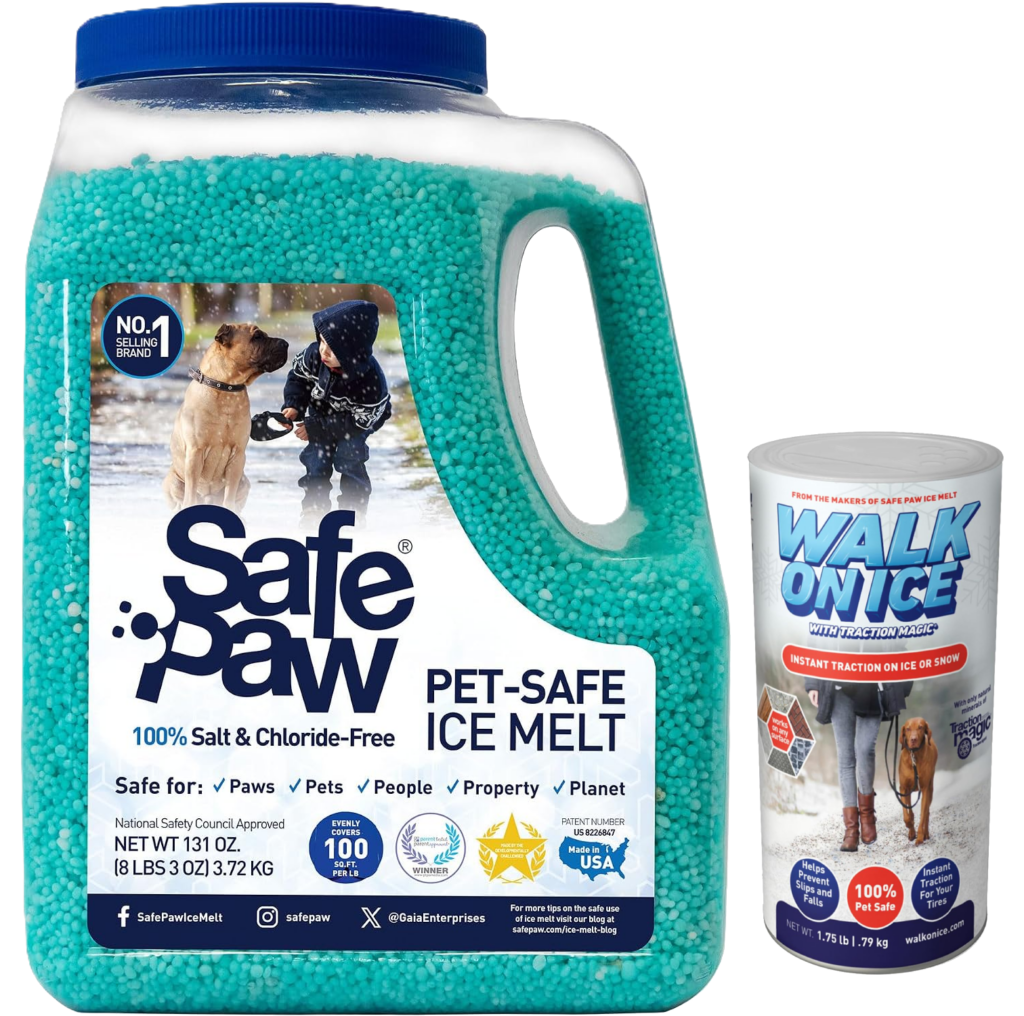
Need Both Results?
Use Safe Paw when the goal is to melt and loosen accumulated ice. Use Walk On Ice where immediate traction is needed during or after ice treatment.