WOI Staging

Traction Agent for Instant Grip

Where to Use Walk On Ice for Immediate Traction?

Use Walk On Ice on targeted icy or snow-packed outdoor areas such as steps, walkways, driveways, decks, parking areas and the ground around stationary vehicle tires. This portable mineral traction agent adds immediate surface grip; it does not melt or remove the underlying ice. Walk On Ice can be applied anywhere icy slippery surfaces create a need for additional traction. It is designed for targeted areas around homes and outdoor spaces such as steps, walkways, driveways, decks, parking areas where people, pets, or tires need instant grip.
made_in_usa_graphic

Made & packaged in the USA

Part of the Traction Magic family from Gaia Enterprises, invented by Steven J. Greenwald.

Ice Traction Guide

Ice Traction for Sidewalks, Driveways & Slippery Areas

01

Walk On Ice for Entrances and Landings

The area immediately outside a door can become icy from tracked snow, roof runoff and changing temperatures. Apply Walk On Ice to the outdoor landing and first step where additional traction is needed.

Apply here The walking line between the door, landing and first step.
Check again after New snow, runoff or regular foot traffic moves or covers the granules.
Spot the recurring problem

Where Does Ice Keep Coming Back Around a Home?

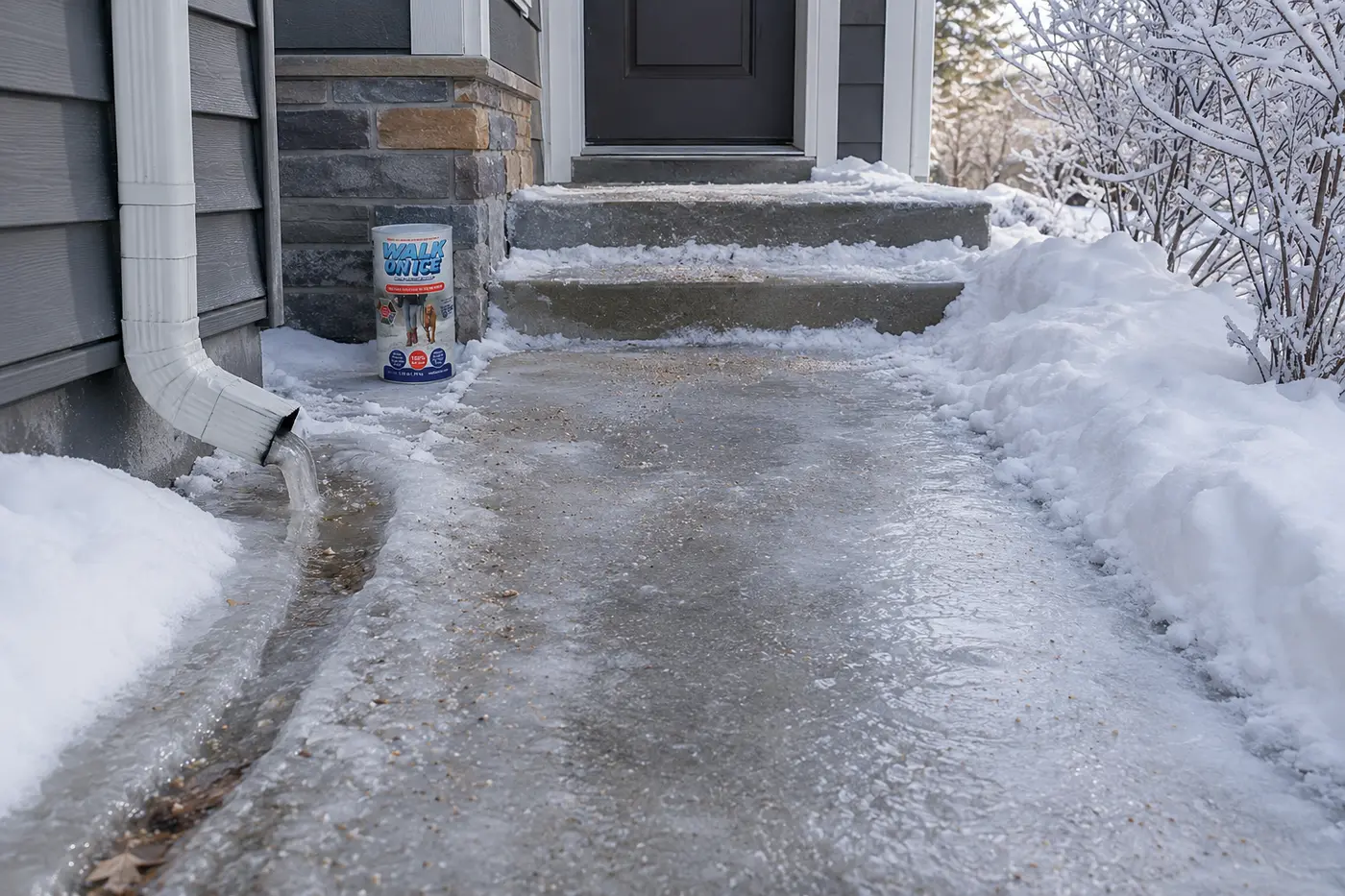
Ice often returns where sunlight is limited, water repeatedly crosses a route or snow is compressed by regular traffic. These are the places worth checking again, even when the rest of the property looks clear.
Recurring ice caused by shade, roof runoff and compacted snow along a residential walkway
“That shady strip never seems to clear.”

Look beside walls, fences, trees and the north-facing side of a building, where ice can remain after nearby pavement has cleared.

“Water keeps crossing this walkway.”

Check below roof edges, gutters and downspouts. The same runoff line can freeze again when the temperature falls.

“The snow here has been walked or driven over.”

Footsteps and vehicle tires can press snow into a firm, smooth layer that needs additional surface texture.

“It looked wet earlier, but now it is icy.”

Pay attention to low spots and slopes during freeze-thaw weather, especially when temperatures fall later in the day.

“The pavement looks clear, but it feels slick.”

Black ice can blend into the pavement. Inspect the full walking route instead of checking only the most visible patch.

Walk On Ice mineral traction granules being applied to icy outdoor steps and a landing
Steps, landings and porches

Cover the Part of the Step People Actually Use

Focus on icy treads, step edges and the landings at the top and bottom of the steps.

Common surfaces Concrete, wood and exterior metal.
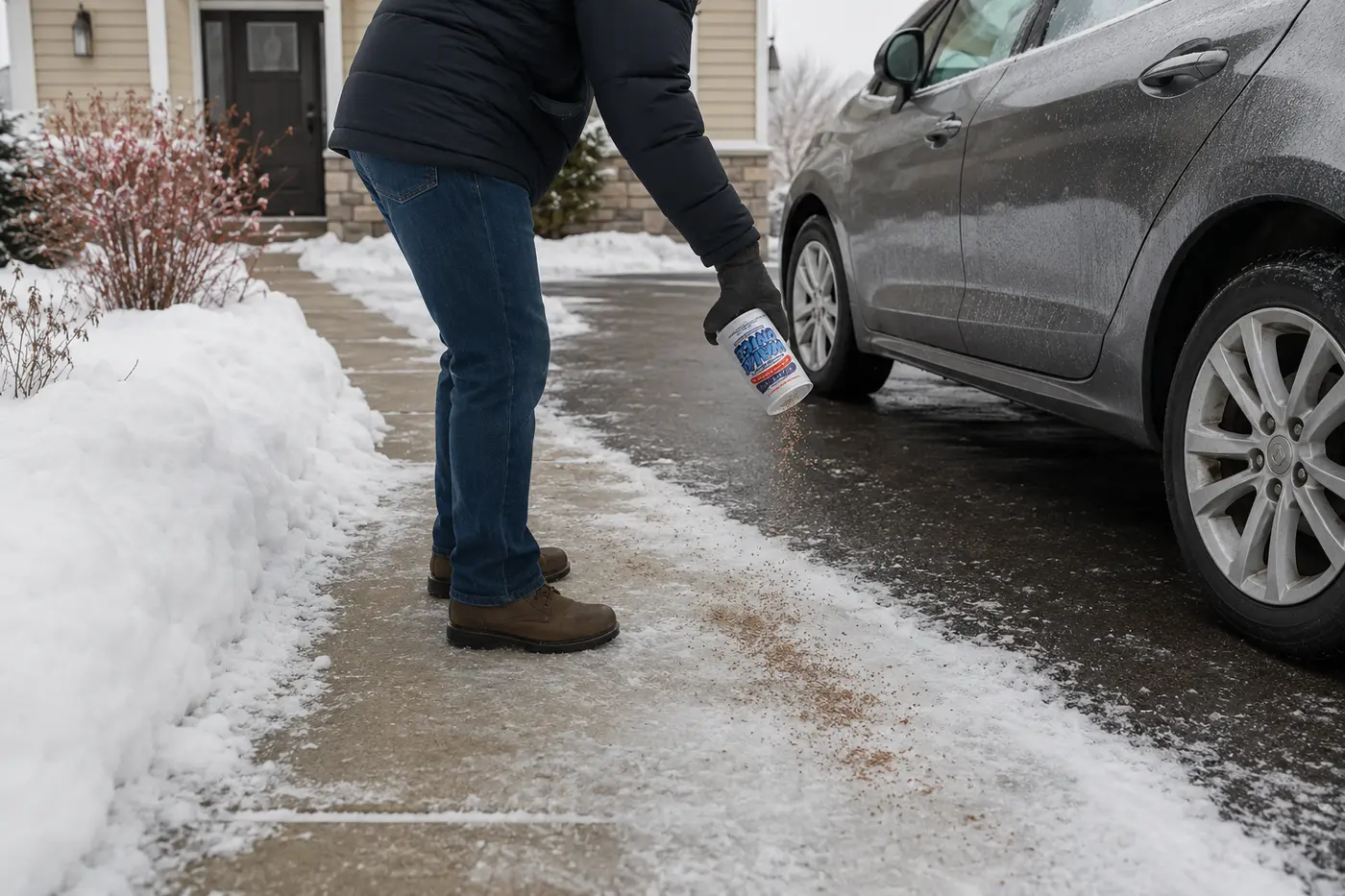
A homeowner applying Walk On Ice along an icy walkway and driveway access route
Walkways, driveways and parking

Follow the Route Instead of Covering the Whole Area

Give attention to shaded sections, slopes, gates, vehicle-door access and transitions between surfaces.

Common surfaces Concrete, asphalt, brick, pavers and stone.
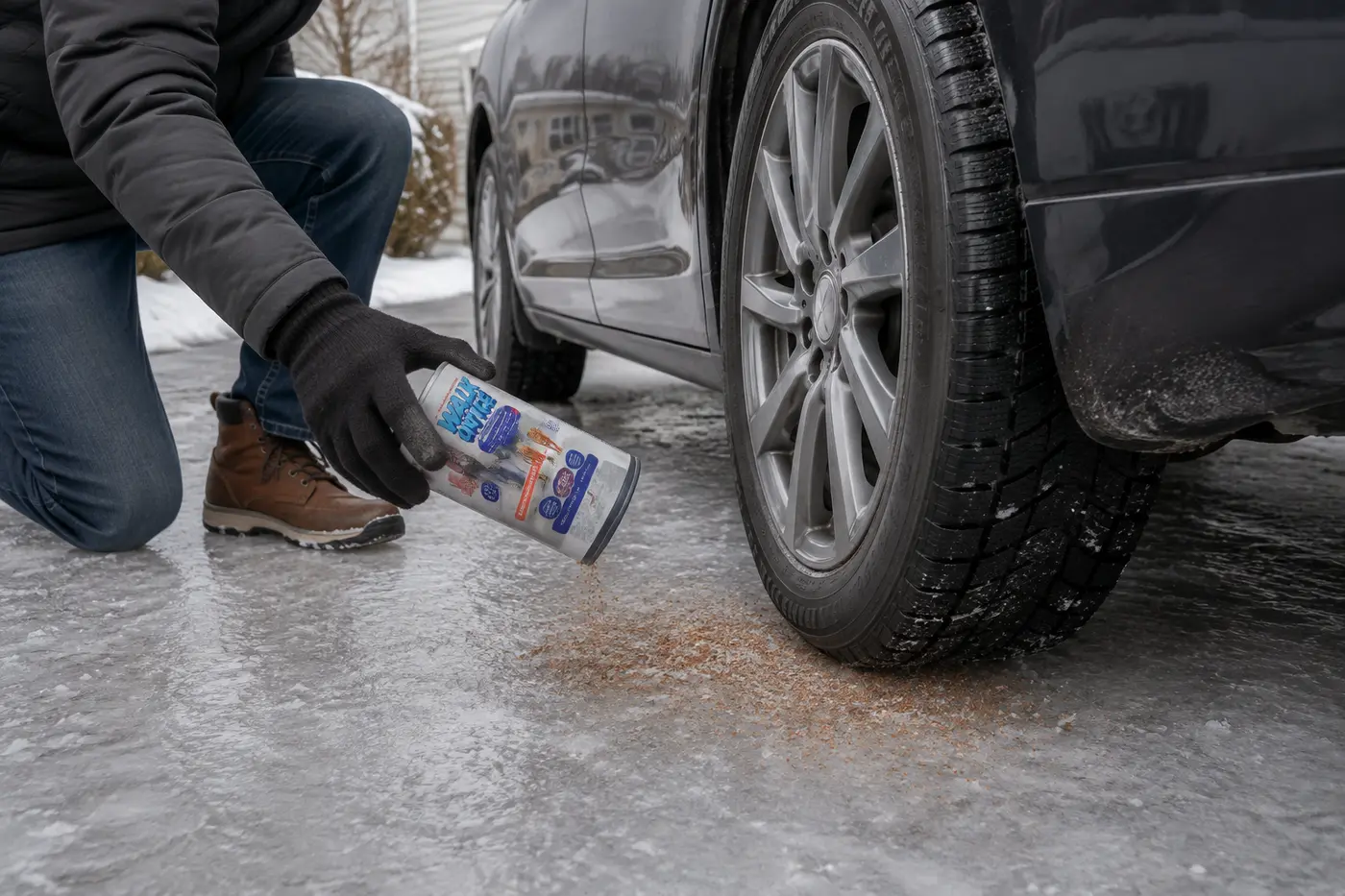
Walk On Ice mineral traction granules being applied to icy ground at a stationary vehicle tire
Stationary vehicle tires

Place Traction on the Ground Where the Tire Needs Grip

Apply at the tire’s contact point and along the short direction in which the vehicle needs to move.

Placement reminder Apply it to the ground around the tire, not to the tire sidewall.

Commercial and bulk requirements

Managing a Larger Property or Facility?

Walk On Ice is designed as a portable residential traction format. For workplaces, facilities, parking areas, commercial properties or bulk requirements, explore the Ice Traction commercial product range.

Questions, answered

Frequently Asked Questions

Where can I use Walk On Ice?
Walk On Ice can be used on targeted icy or snow-packed outdoor areas such as entrances, steps, sidewalks, walkways, driveways, decks, porches, parking areas, pet-walking access routes and the ground around stationary vehicle tires.
Yes. Apply it to the icy or snow-packed walking line, with particular attention to icy slippery surfces, shaded sections, slopes, gates, low spots and transitions between surfaces.
It can be applied to icy driveway areas, but full coverage may not be necessary. Focus on pedestrian routes, slopes, compressed snow, vehicle-access areas and other specific slippery icy spots.
Yes. Clear loose snow and lightly apply it to icy stair treads and landings, particularly the first and last step, tread edges and the area beside a handrail.
It can be used for targeted traction on an icy outdoor deck or porch. Apply a light scattering to the walking line and monitor granules moved by foot traffic or sweeping.
These materials are common in the steps, walkways, driveways and paths where Walk On Ice may be applied. Focus on the icy contact area and follow the current product label for complete use information.
Yes, It can add mineral texture to a confirmed black-ice patch. Inspect beyond the treated spot because transparent ice may extend farther than the visible area.
Yes. Remove loose snow first and apply it to the remaining firm, slippery layer so the granules can remain exposed at the contact surface.
Heavy slush can move or bury traction granules. Clear excess slush where practical, apply to the firmer surface underneath and recheck the area if it refreezes.
Yes. Apply it to the icy or snowy ground at the stationary tire’s contact point and in the direction the vehicle needs to move. Apply it to the ground, not the tire sidewall.
Apply it when the traction material can remain exposed on the slippery surface. After substantial snowfall, clear the loose accumulation before applying it to the firm icy or snow-packed layer underneath.
Recheck the location after snowfall, runoff, foot or vehicle traffic, sweeping, melting or refreezing. Reapply when the granules have been covered, removed or displaced.