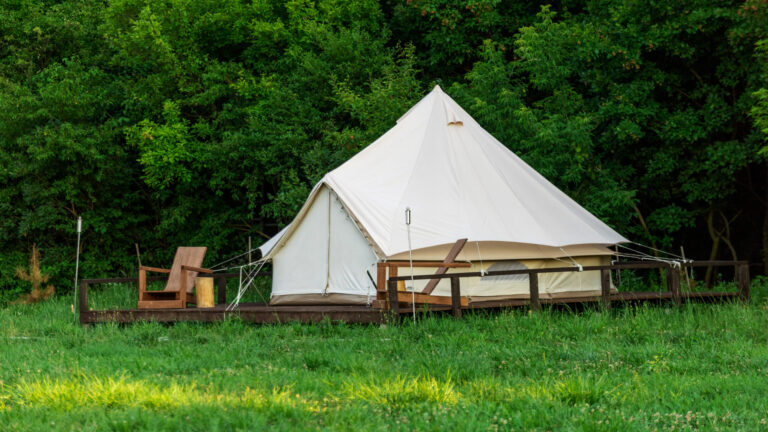
Choose the Right Snow Camping Tent
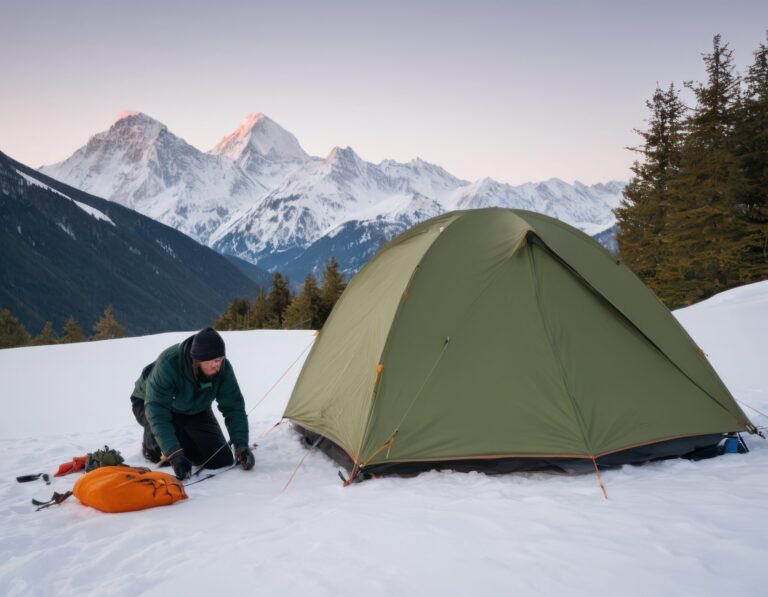
The first step, of course, is to have a snow camping tent in the snow designed for the job. Not all tents are created equal, and when it comes to withstanding the rigors of winter, you need something sturdy and insulating. When shopping, look out for tents for snow. These are built to handle the weight of accumulated snow and come with additional insulation to keep the biting cold at bay.
Scout the Perfect Spot
Location, location, location! This cannot be stressed enough. You want to pick a spot that’s shielded from the wind. Consider natural windbreakers like trees or large rocks. But be cautious – setting up your tent underneath a tree can mean waking up to a cascade of snow on your tent, especially if there’s a strong gust.
Compact the Snow
Before you set up, make sure to compact the snow beneath your tent site. Why? Loose snow can melt from your body heat and make things soggy inside. Walk around, stamping your feet, or use your snowshoes or skis to make a firm foundation.
Anchor It Well
Stakes that work well in the soil might not be as effective in the snow. Opt for snow stakes or anchors which are designed to grip the snow better. If you’re in a pinch, you can also use items like bags filled with snow as makeshift anchors. Just ensure your tent in the snow is securely grounded; winter winds can be unforgiving.
Insulate from Below
Snow, while cold, can also act as an insulator. Still, you’d do well to add extra insulation between your tent floor and the snow. A durable tarp or ground cloth can be a barrier against the cold and any moisture seeping in. On top of this, lay down an insulated sleeping pad for added warmth and comfort.
Keep Ventilation in Mind
It might seem counterintuitive, but you want to ensure your tent for the snow is well ventilated. Why? The warm air from your breath can cause condensation inside your tent, which can get things damp pretty quickly. Most tents for snow come with adjustable vents, which you can use to regulate airflow.
Safety First with “Walk On Ice”
Setting up your tent is just the start. Moving around a snowy campsite, especially at night, can be treacherous. Even the most seasoned campers can find themselves slipping and sliding. This is where “Walk On Ice” comes into play.
Imagine you’ve found the perfect spot, but the ground is icy. Before you begin the setup process, spread some Walk On Ice around your intended site. Unlike traditional salt or ice melts which can leave a slippery residue, Walk On Ice provides instant traction, making it safer to move around as you set up. Plus, it’s effective even on the most challenging black ice.
Not only is it effective, but Walk On Ice is also incredibly convenient. The compact packaging means it can easily fit into your bag or even your glove box. And for those environmentally conscious campers, you’ll be pleased to know it’s 100% natural. Safe for both pets and humans, it ensures you’re not leaving any harmful chemicals behind on your winter adventure.

Final Thoughts
Winter camping is an experience like no other, but it requires preparation and knowledge. By following these snow tent setup tips, you’ll ensure you have a cozy and safe shelter to retreat to after a day of winter exploration. With the added security of Walk On Ice, you’ll navigate your campsite with confidence, making your snowy adventure all the more enjoyable. Stay warm, and happy camping!