
Cat Litter For Ice Melt? Uncovering Surprising And Practical Uses

When winter brings its icy grip, finding effective ways to manage slippery surfaces becomes a priority. Among the various solutions, using cat litter to melt ice has become a popular method. However, while cat litter can be useful in certain winter scenarios, it’s essential to understand its actual capabilities and limitations. This article will explore the use of cat litter to melt ice and why some modern products may offer a more effective alternative.
Does Cat Litter Help on Ice? Understanding Its Role in Winter Safety
The idea of using cat litter to melt ice stems from the need for a quick and accessible solution to slippery surfaces. Cat litter is often chosen because it’s readily available in many households. When spread over icy areas, cat litter can provide some traction. However, it’s crucial to note that cat litter does not actually melt ice.
The Drawbacks of Using Cat Litter for Ice Traction on Driveways
It’s a myth that cat litter melt ice. It does offer temporary traction, but it has significant drawbacks as an ice management solution. Firstly, cat litter does not melt ice. It simply provides a gritty surface which can help prevent slips. However, when wet, some types of cat litter can become clumpy and slick, potentially creating a more slippery surface. Additionally, as the litter absorbs water, it can turn into a mushy mess that is difficult to clean up and can clog drains.
Cat Litter vs. Ice Melt: Why Cat Litter Does Not Melt Ice
There’s a common misconception that cat litter can be used to melt ice, similar to how salt works. However, cat litter lacks the chemical properties necessary to lower the freezing point of water, which is how traditional ice melts work. Instead, its primary function is to provide a rough surface to aid in traction.
Choosing the Best Cat Litter for Icy Walkways vs. Professional Deicers
When comparing cat litter to ice melts, it’s important to recognize their distinct functions. Ice melts, such as salt, chemically reduce the freezing point of water, thus melting the ice. Cat litter, on the other hand, does not have this capability and serves only to increase traction on the ice’s surface.
Walk On Ice: A Specialized Alternative to Cat Litter for Ice Traction
In contrast to cat litter, Walk On Ice is a traction agent specifically designed for icy conditions. It offers a superior solution when traditional methods like salt and ice melts fail. Unlike cat litter, Walk On Ice provides instant traction on all icy surfaces, including black ice, where salt and other ice melts are often ineffective.
Get ready for winter with Walk On Ice instant traction on snow and ice
Instant Grip: How Mineral-Based Traction Agents Outperform Kitty Litter
Walk On Ice works by absorbing the liquid layer of water on the ice, allowing the product to lock into the icy surface. This creates a stable, non-skid surface, ensuring safe passage across icy areas. Its effectiveness is immediate, providing a significant advantage over cat litter, which does not offer the same level of stability or immediate traction.
Why Non-Clumping Cat Litter for Winter Traction is Often Messier Than Natural Minerals
Another advantage of Walk On Ice over cat litter is its composition. It is 100% natural and safe for pets, people, and the environment. Unlike cat litter, which can become a messy hazard and clog drains, Walk On Ice is safe to handle and does not create additional clean-up issues.
Application Tips for Gaining Immediate Traction on Icy Surfaces
Using Walk On Ice is simple and convenient. The product comes in a handy canister, making it easy to store and use. When applied to icy surfaces, it quickly provides a non-slip surface, making it an essential tool for winter safety.
Does Kitty Litter Help Get a Car Out of Snow? Emergency Traction Myths
Now, while we’ve cleared up the myth about cat litter melting ice, there’s another angle people bring up every winter: can kitty litter to get out of snow actually help when your car is stuck?
The logic makes sense—you sprinkle litter under your tires, hoping the grit will give you traction. And yes, sometimes it does help. The rough particles can provide just enough friction for your tires to catch and move forward. But here’s the catch: once kitty litter absorbs moisture, it quickly clumps together, becoming mushy and slick. Instead of improving traction, it can leave your tires spinning in a muddy mess.
That means while kitty litter might bail you out in a pinch, it’s far from reliable. If you’re serious about being prepared for snow emergencies, keeping a traction agent like Walk On Ice in your trunk is a smarter move. It doesn’t clump, doesn’t leave sludge, and works instantly on both ice and packed snow.
Does Sand Help Melt Ice? Evaluating Sand vs. Kitty Litter Traction for Driveways
Another common winter hack you’ll hear is tossing sand on your driveway or road, but here’s the question: does sand help melt ice? The straight answer is no. Sand doesn’t melt anything—it only sits on top of the ice and provides temporary grit.
The upside is that it works in extremely cold temperatures where chemical deicers may struggle. The downside? Sand has to be reapplied often, it washes away with melting snow, and it can create a massive cleanup headache come spring. If it makes its way into drains, sand can clog systems and even cause local flooding issues.
Think of sand as a cover-up rather than a cure. It gives you traction in the moment but does nothing to actually solve the ice problem. That’s why combining preventive measures (like shoveling early) with a dependable traction product is much more effective than relying on sand alone.
Problems with Using Kitty Litter for Ice Driveway Safety and Cleanup
If you’ve ever spread kitty litter for ice driveway safety, you know it seems like an easy, affordable fix. It’s sitting in the house anyway, so why not use it outside? The problem shows up afterward.
Clay-based litter leaves behind sticky clumps that are tough to sweep up. Silica litter scatters into sharp little bits that aren’t exactly friendly to bare paws or kids playing outside. And biodegradable options? They often break down too quickly to provide reliable traction.
The other issue is aesthetics—your driveway can end up looking like a sandbox exploded. Not to mention, litter tracked indoors can scratch the flooring and leave dusty residue everywhere. That’s why many homeowners end up regretting the choice and switching to traction-specific products instead. Walk On Ice, for example, gives you all the grip without the mess, and when the ice melts, the minerals can even be swept into your lawn as a nutrient boost.
Road Sand vs. Household Items for Ice Traction: Environmental Impact
Municipal crews often spread road sand on icy highways, and it does help vehicles get some grip. But at the residential level, the results are mixed. Sand doesn’t adhere well to smooth surfaces, so on a sloped driveway or stairs, it can simply slide away. On top of that, the constant reapplication needed makes it more labor-intensive than it seems at first.
There’s also the environmental cost. Once winter is over, leftover sand can wash into storm drains, rivers, or streams, affecting local water quality and aquatic life. That’s one of the reasons many cities are slowly reducing their reliance on sand in favor of alternatives that offer better performance and fewer ecological downsides.
For homeowners, this is a reminder: just because sand is used on roads doesn’t mean it’s the best choice for your property.
Conclusion: Best Practices for Using Traction Agents and Cat Litter for Ice
So, where does that leave us? We’ve seen that cat litter doesn’t melt ice, and while kitty litter to get out of snow might work once or twice, it’s messy and unreliable. We’ve learned that sand doesn’t help melt ice—it only hides the hazard temporarily. Even kitty litter for ice driveway comes with more clean-up than convenience, and road sand can cause bigger problems for the environment.
The better approach? Invest in solutions designed for the job. Traction agents like Walk On Ice provide immediate, dependable grip without the mess, without damaging surfaces, and without the hidden costs of cleanup or corrosion. Combined with safe walking practices and a little preparation, you can enjoy winter without dreading every icy patch or snowstorm.
At the end of the day, it’s not just about quick fixes—it’s about choosing smarter, longer-lasting methods to stay safe, protect your property, and make winter a little less slippery.

Other Ice Melt Products
Safe Paw
The Original and #1 Selling Pet and Child Safe Ice Melt for over 20 years. Guaranteed environmentally safe – will not harm waterways and sensitive wetlands. All products are made in the USA.

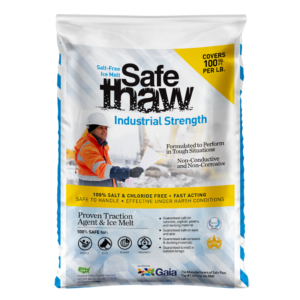
Safe Thaw
Imagine an ice melt you can put down and never worry about. It won’t harm pets, kids, and your property. That’s Safe Thaw. Unlike anything else on the market, Safe Thaw can change how winter affects our planet.