
1. Is Rock Salt Safe for Decorative Concrete Surfaces?
Alright, rock salt. It’s like that old winter coat – does the job but not always with style. It’s good only for ice melt for stamped concrete, it’s like inviting a bull into a china shop. Too harsh, too corrosive, and before you know it, your beautiful concrete is looking a bit sad.
2. Calcium Chloride vs. Magnesium Chloride: Which is Safer for Concrete?
Then, we’ve got calcium chloride. This guy works fast, even in the deep freeze, but it’s kind of like using a sledgehammer to crack a nut. Great at melting ice but way too harsh for our stamped concrete buddies.
3. The Gentler Approach: Magnesium Chloride
Magnesium chloride sounds better, right? It’s milder but remember, it’s still part of the chloride family. It’s like opting for a lighter coffee roast – easier on the system but not entirely without its kick.
4. Eco-Friendly and Non-Corrosive Ice Melt Alternatives for Homeowners
Now, let’s talk beets. Beet juice mixtures are becoming popular as a more eco-friendly choice. They’re like trying a new health food trend – good for you, but it might take some getting used to. They can be kinder to your concrete, but their ice-melting superpowers can be a bit hit or miss.
5. Winter Concrete Protection Tips: Using Sand for Traction
Good old sand – it’s like the comfort food of ice management. It won’t melt anything, but it’ll keep you from slipping and sliding. It’s a safe bet for your concrete but doesn’t do much in terms of actual ice melting.
6. Best Way to Get Traction on Icy Driveway Without Damage
And now, drumroll, please… Enter ‘Walk On Ice.’ When you want to avoid the concrete-cracking drama of traditional melts, this is your hero. It’s all about grip and traction, not melting. Safe for your stamped concrete, pets, and plants, it’s the eco-friendly, non-damaging solution to those icy mornings. Imagine winter boots for your driveway – effective, no mess, no stress.

Why You Need a Concrete Safe Deicer for Stamped and Sealed Surfaces
Traditional ice melts might be the go-to, but they’re not always the best for our beloved stamped concrete. They can be corrosive, like that harsh cleaning product that gets the stain out but fades your favorite shirt.
Will Kitty Litter Melt Ice? Myths and Realities of Household Hacks
Since we’re on the subject of unconventional methods, let’s clear up one common myth: will kitty litter melt ice? The short answer is no. Kitty litter doesn’t have melting properties at all. What it does is provide a gritty layer that might help with traction for a short time. The problem is that most clay-based litters clump when wet, which turns them into a muddy mess that later freezes and becomes even slicker. Silica-based litter scatters easily and doesn’t bond to the surface, so you’ll often find yourself sweeping it up instead of walking safely.
So, while kitty litter might feel like a free fix because it’s already sitting in your garage, it’s really not a reliable solution for icy driveways or walkways. If traction is your goal, Walk On Ice is built for that exact purpose—gripping the surface instantly without the messy aftermath.
Finding an Ice Melt That Won’t Damage Concrete or Stained Finishes
If you’re set on using a deicer instead of a traction product, the big question is: what counts as a safe deicer for concrete? Stamped concrete is especially vulnerable because its surface is often sealed for appearance, and harsh chemicals can eat away at that finish. Chloride-based salts like rock salt or calcium chloride are particularly damaging over time.
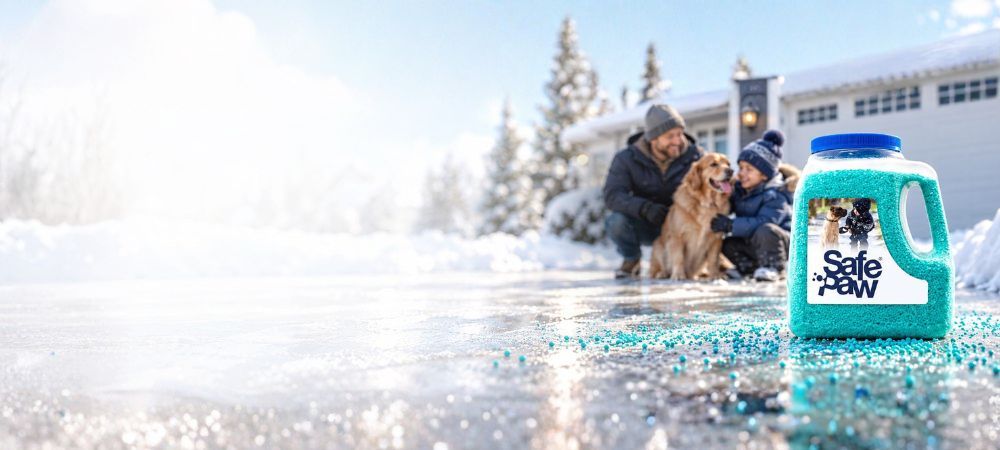
Safer options include magnesium chloride (though still not perfect) and eco-friendly blends like Safe Paw, which is specifically designed to melt ice while being gentle on surfaces, pets, and plants. For homeowners with decorative or stamped concrete, the golden rule is this: avoid harsh chlorides and always test in a small area first. The safer choice may not melt as aggressively, but it will protect your investment for years to come.
Stamped Concrete Ice Melt Recommendations for Instant Grip
Of course, sometimes you’re not looking to melt the ice at all — you just need to get traction on an icy driveway fast. That’s where Walk On Ice shines. Instead of waiting hours for ice melt to work, a quick sprinkle gives you immediate grip under your boots or car tires.
The best part is that it’s safe for concrete, asphalt, and vegetation. That means no springtime surprises of spalled concrete or damaged landscaping. For those mornings when you’re already running late and can’t wait for melting to happen, traction products are the smartest move. Think of them as your emergency kit for instant safety.
How to Make Slippery Wooden Steps Safer: Pet Safe Ice Melt for Concrete
Driveways get a lot of attention in winter, but let’s not forget about stairs. Outside wooden steps may get slippery when they are wet. How could you make them less slippery? For one, regular maintenance like sealing the wood helps, since it prevents water from soaking in and freezing. Adding textured stair treads or non-slip strips is another good step — they give your boots something to grip even when the wood itself is slick.
But the easiest solution when you’re dealing with ice is to use a traction product. Walk On Ice can be sprinkled directly on wooden steps without fear of corrosion or chemical damage. Unlike salt, which can eat away at wood fibers and strip finishes, Walk On Ice simply grips the surface and makes it safe immediately. Combine that with handrails, and you’ve dramatically reduced the risk of a nasty fall.
Conclusion: Prioritizing Your Best Ice Melt for Stamped Concrete
So, while the debate over which deicer or traction aid to use continues every winter, the real key is understanding the difference between melting and gripping. Asking will kitty litter melt ice shows how much misinformation is still out there — it won’t, and it usually makes things worse. Looking for a safe deicer for concrete means steering clear of harsh chlorides and leaning into gentler formulas like Safe Paw. And when you need to know how to get traction on an icy driveway or how to make slippery wooden steps safer, the answer is often a traction aid like Walk On Ice.
The bottom line? Stamped concrete, driveways, and wooden steps all deserve protection, but they also need to stay safe during winter. Ice melts like Safe Paw and traction agents like Walk On Ice each have their place — one melts, one grips — and together, they give you a smarter, safer way to face the season without damaging your property.


