Sand vs. Kitty Litter for Ice Traction: Understanding the Drawbacks
Many people use sand or kitty litter for added traction on ice. However, these materials have their drawbacks. Sand can scatter and does not adhere well to the ice, reducing its effectiveness. Kitty litter, while providing initial traction, can become clumpy and slippery when wet, exacerbating the risk of falling.
Instant Traction on Icy Surfaces: Why a Traction Agent is Essential
For a more reliable solution, Walk On Ice is highly recommended. This natural traction agent provides instant traction on all icy surfaces, a significant advantage over traditional methods. When salt and ice melt take time to work and can leave surfaces slippery during the process, Walk On Ice offers immediate safety. Its effectiveness on black ice, where other products fail, is especially noteworthy.

The Science of Traction for Walking on Ice
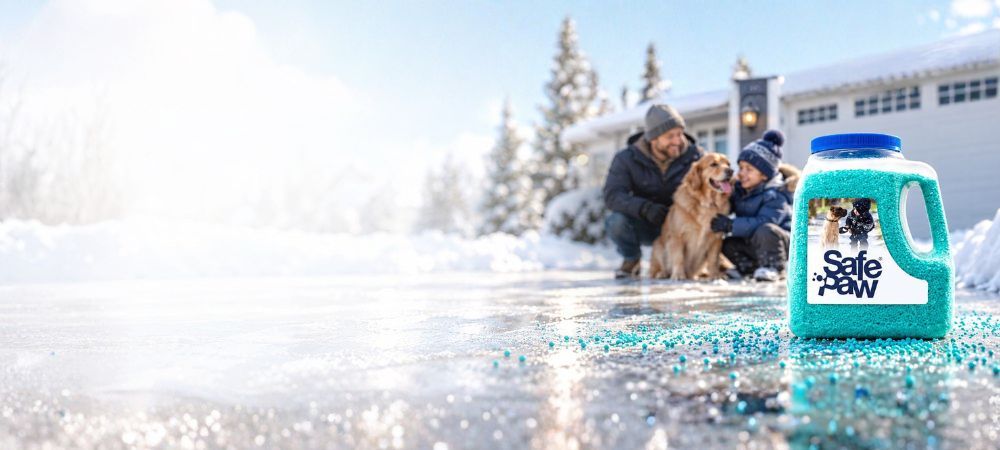
Walk On Ice works by absorbing the liquid layer of water on the ice, allowing its grippers to lock into the icy surface. This creates a stable, non-skid surface, making it safer to walk on ice. It’s a 100% natural product, safe for pets, people, and the environment, and effective in temperatures as low as -35 degrees Celsius.
Applying Walk On Ice for Winter Slip and Fall Prevention
Using Walk On Ice is simple. Just sprinkle it on the icy surface where you need to walk. Its fast action and ease of application make it an essential tool for winter safety. Its handy canister makes it convenient to carry, ensuring you’re always prepared for icy conditions.
How Thick Does Ice Need to Be to Walk on It? Safe Ice Thickness for Walking
It’s one thing to talk about icy sidewalks, but when frozen lakes and ponds call your name, you need to be cautious. The rule of thumb is that ice should be at least 4 inches thick to walk on safely. Anything less is risky because ice doesn’t freeze evenly—what looks solid in one spot may be dangerously thin a few feet away. For skating or walking in groups, even more thickness is required to distribute weight safely.
A good tip is to always test the ice before you venture out. Carry a spud bar or auger to check thickness in multiple places. And never assume yesterday’s safe ice is still safe today—temperature fluctuations and hidden currents can weaken ice quickly. While sidewalks and driveways can be made safer with Walk On Ice, frozen water bodies demand patience, testing, and a willingness to walk away if conditions aren’t right.
How to Make Stairs Less Slippery: Solutions for Slippery Outdoor Steps in Winter
Driveways may get most of the attention, but stairs are often the biggest hazard zone in winter. So, how to make stairs less slippery without relying solely on salt or temporary fixes? One option is to install non-slip treads or adhesive strips designed for outdoor use. They give shoes and boots something to grip onto, even when surfaces are icy.
Another solution is using a traction agent like Walk On Ice directly on the steps. Because it works instantly, you don’t have to wait for melting or worry about slick residue. Unlike sand or kitty litter that scatter or turn messy, it stays effective underfoot. Combine that with proper handrail use and mindful stepping, and you drastically reduce the risk of slipping on stairs, even during peak freeze-thaw cycles.
Expert Ice Walking Safety Tips: Maintaining Balance on Slippery Surfaces
No matter how careful you are, icy conditions can sneak up unexpectedly. That’s why people often ask, how do you actually walk on ice without falling? Beyond the penguin shuffle already covered, here are a few added tricks:
- Keep your eyes up: Looking down at your feet actually throws off your balance. Keep your head up and scan ahead for hazards.
- Distribute weight evenly: Carry heavy bags close to your body, not out to the side. The more balanced your load, the steadier your footing.
- Slow everything down: Whether it’s stepping off a curb or turning a corner, speed is your enemy on ice. Think deliberate and controlled, not quick.
- Prepare for a fall: If slipping feels unavoidable, bend your knees, tuck your chin, and try to land on your side or thigh instead of your wrists or head.
Pairing these techniques with Walk On Ice-treated surfaces gives you the best of both worlds: personal skill and environmental safety.
How to Fix Slippery Outdoor Wooden Steps: Practical Winter Fixes
Now, let’s tackle one of the most stubborn winter frustrations—slippery outdoor wooden steps. Wood absorbs moisture, and when temperatures drop, that surface becomes like glass. Over time, repeated freeze-thaw cycles make the problem worse by warping boards and creating uneven patches where ice clings.
Here are some practical fixes:
- Add traction mats: Rubber or heavy-duty outdoor mats are inexpensive, reusable, and create a grippy surface instantly.
- Seal and maintain wood: Keeping steps properly sealed reduces water absorption and helps prevent ice from bonding so tightly.
- Use pet-safe traction products: Sprinkle Walk On Ice before heading out the door—it clings better than sand and avoids the mess of kitty litter.
- Install handrails: Not technically a traction fix, but a huge safety backup when a step does catch you off guard.
Wooden steps are notoriously unforgiving, but with preparation, you can keep them safe for family, guests, and pets all season long.
Conclusion: Mastering Safety and Traction for Walking on Ice
So, while the five key techniques for walking safely on ice cover the fundamentals, the real-world questions go even further. Knowing how thick ice needs to be to walk on it keeps winter recreation safe. Learning how to make stairs less slippery and how to fix slippery outdoor wooden steps transforms daily hazards into manageable tasks. And mastering the extra tips on how to walk on ice without falling means you’re better prepared, no matter where icy conditions catch you.
What ties all of these strategies together is preparation. Knowledge tells you when it’s safe, technique teaches you how to move, and tools like Walk On Ice ensure the ground beneath you is ready too. Winter’s challenges don’t have to limit your confidence outdoors. With the right mix of habits and traction, you’re not just surviving icy conditions—you’re walking through them with control, safety, and peace of mind.